Tuesday, June 23, 2015

Weekend

Every work day is a wait for the weekend
Not that I hate my workplace
Just that I feel more at home at home

Monday, July 29, 2013

Ah, the freshness in the face of leaving a task undone -- Fernando Pessoa

Ah, the freshness in the face of leaving a task undone
-- Álvaro de Campos (Fernando Pessoa)


Ah, the freshness in the face of leaving a task undone!
To be remiss is to be positively out in the country!
What a refuge it is to be completely unreliable!
I can breathe easier now that the appointments are behind me.
I missed them all, through deliberate negligence,
Having waited for the urge to go, which I knew wouldn’t come.
I’m free, and against organized, clothed society.
I’m naked and plunge into the water of my imagination.
It’s too late to be at either of the two meetings where I should have been at the same time,
Deliberately at the same time...
No matter, I’ll stay here dreaming verses and smiling in italics.
This spectator aspect of life is so amusing!
I can’t even light the next cigarette... If it’s an action,

It can wait for me, along with the others, in the non-meeting called life.

Wednesday, July 24, 2013

Foreigners

I am an Indian
She is from Canada

I work in a multinational bank
She teaches Bharatanatyam to children

I love action movies and iPad games
She plays Indian classical music all day long

I am into gymming, I love to work out my body
She does yoga, says it helps her feel her body

I stay connected 24x7 and hate that she doesn't keep a mobile
She smiles and says meditation keeps her connected

I shrug
She smiles

We are foreigners
We love each other.


------------------------

Another version...


I am an Indian
She is from Canada

I work in a multinational bank
She teaches Bharatanatyam to children

I love action movies and iPad games
She plays Indian classical music all day long

I am into gymming, I love to work out my body
She does yoga, says it helps her feel her body

I stay connected 24x7
and hate she doesn't keep a mobile

She says meditation keeps her connected
and bows in front of the temple

I sigh and say I'll wait outside
A seer waves his forefinger from top of the stairs:
Foreigners not allowed

I shrug
She smiles


We love each other
We are foreigners.

Thursday, May 23, 2013

A Challenge for Appu & Everyone Else...


OK, here is a game. There is one alphabet that I can't type now. Because the key is not working. You have to guess which one. Whatever I am writing here is without that particular letter. The faster or earlier you guess, the more points you win. Fair enough? Or, you think it's crazy? Anyways, just see how much time or how many sentences it takes you to realise which letter is missing in this note. So, be quick.

Now, you want a clue? I miss that alphabet in almost every line I write. For me, it is extremely tough to write without that letter. It makes me change my sentence structure. It makes me write in a style I am not familiar with. I am trying my best not to make it apparent. It's challenging. But very interesting too. Have you got it yet?

Of course I am not trying to make your task any easier by making sure I use all the other alphabets. Perhaps I will, by the time I am through with this.

This morning I took Appu to her school, for a workshop on photography. The learners were making a newsletter each in two groups. They were loving it, I saw. Tomorrow they will go to a park, early in the morning, to take pictures. Again in two groups. One will focus on trees, animals, joggers, etc. The other will concentrate on the history of the place. It will be interesting. Now I am sure you've got the missing alphabet. I can't go on without it. It's tiring. An now there is no power. Aircon is not working. :(

In fact, I guess I have all the other alphabets in here. So just go through the text again in case you are not yet sure. Or call me. Cheers!

Sunday, April 14, 2013

A Poet's Suicide Note


And I picked up a huge mirror
And I walked into the crowd
Of mad men digging their own graves
And yelled,
"Bastards, look here, look at you,
See what the fuck you're doing!"

And they, they looked through my mirror
And shouted in one big voice,
"There goes a loafer, catch him!"
And they broke my mirror and tore my clothes
They dragged me to the ground
And handed me a pickaxe and said,
"Lie low, you devil, dig your ditch,
Toil to death if you want to live!"


Tuesday, March 19, 2013

Baudelaire's Toy of the Poor


The Toy of the Poor
-- Charles Baudelaire

I want to suggest an innocent diversion. So few amusements
involve no guilt!
When you go out in the morning, determined only to wander up
and down the highways, fill your pockets with little gadgets that cost
no more than a sou—like the flat puppet worked by a single string,
the blacksmith beating on an anvil, the rider and his horse, with a
tail that works as a whistle—and in front of taverns, or under the
trees, give them out as gifts to the unknown poor children you
encounter. At first, they won’t dare to take them; they won’t believe
their good fortune. But then their hands will eagerly snatch up
the present, and off they will flee, as cats do when they go far away
to eat the morsel you have given them, having learned to distrust
people.
Down one road, behind the gate of an enormous garden, at the
back of which could be seen the whiteness of a pretty chateau struck
by the sun, stood a fine and fresh child, dressed in those country
clothes that are so coyly attractive.
Luxury, the absence of worry, and the habitual spectacle of wealth
make these children so pretty that one would think them made from
a different mold than the children of mediocrity or poverty.
Next to him on the grass lay a splendid toy, as fresh as its master,
gleaming and gilded, wearing a purple outfit, covered with little
feathers and glass beads. But the child was not playing with his
favorite toy; instead, this is what he was watching:
On the other side of the gate, on the road, among the thistles and
nettles, there was another child, dirty, puny, soot-covered, one of
those pariah-animals in which an impartial eye would detect beauty
if, like the eye of the connoisseur detecting an ideal painting beneath
a layer of varnish, he could wash off the repulsive patina of poverty.
Through this symbolic barrier separating two worlds, that of the
highway and that of the chateau, the poor child was showing his
own toy to the rich one, who examined it eagerly as if it were some
rare and unknown object. Now, this toy that the dirty little child was
provoking, tossing and shaking in a box with a grate—was a live rat!
The parents, through economy no doubt, had taken the toy directly
from life itself.
And the two children laughed with each other fraternally, smiling
with teeth of an equal whiteness.

-- Charles Baudelaire, Paris Spleen

Wednesday, March 06, 2013

What the fuck?


Long, long ago, in our college days
we drunken radicals,
smokers, lovers and sports fans,
living what we still call ‘the life’,
would often say,

Hey let’s not waste our lives,
let’s a couple of us work at a time
and let’s the rest of us live in merry

At forty plus it’s too late to go back
but it’s true I feel more insecure and unsure,
wasted and spent, more than ever,
growing addicted to money with every pay rise,
luxuries turning necessities day after day.
What the fuck?

My next car is an Audi, after that Bentley,
my iPad keeps me connected
to my clients and my bosses
who of course keep the world spinning
through butcher houses and cock-fight clubs.
What the fuck?

They say work is worship,
I say whatever it’s a waste of time
I miss ethics, I lack passion–
to teach and heal are businesses,
news is what entertains the well-off.
What the fuck?

They say unemployment’s big challenge,
I say bullshit, man has toiled enough,
now let robots and machines do the job.
Why would I do a thing that a software can?
To live, to make money, they say.
What the fuck?

Wait a minute, world, take a break.
Where are we going? What’s there ahead?
Why do we make, sell and buy things all the time?
Is that the only way to live?
What the fuck?

All the deaths, the calamities, tragedies and wars…
life is an accident,
perhaps a gift, perhaps just a chance–
now me, now what?
Yet I make this stupid product,
convince you to buy it,
and fool ourselves saying it’s a boom!
What the fuck?

Hey let’s not waste our lives,
let’s some of us work at a time
and let’s the rest of us live in merry

#######

Monday, December 10, 2012

Work to work, live to live


I don't want to get into the argument over growth versus jobs. That's not my concern here. I want to talk about man and work.

Basically the world is getting more work done with less number of hands. And I think it's good.

I know unemployment is one of the greatest problems India and the world have been facing.

Recently there was a report that some new generation outsourcing firms use robots and humanoids to provide IT outsourcing services at one-fourth of the cost of what TCS and Infosys charge their clients. That could potentially translate into Bangalore getting Bangalored and BPO ceasing to be one of the largest job creators in the country.

Even if that doesn't happen, the country's job picture is bad and getting worse. Apparently, during the boom years of the second half of the last decade, when the economy grew almost 10% a year, the country miserably failed to create enough jobs. For every 100 basis points increase in the growth of gross domestic product, or GDP, there was only one basis point increase in the number of jobs, according to the Planning Commission. This was much lower than the pre-reform decade (1983-93) when employment generation was 52 basis points for every 100 basis points growth in GDP.

And the problem is global. In its World Development Report the World Bank considers jobs as the new big problem. “High unemployment and unmet job expectations among youth are the most immediate concerns,” it says.

I agree.

But I don't think creating jobs is the solution for this problem. The trick is to pay man for doing what she wants to do.

If machines and robots and computer programs can do what we do, let them do it. And let us do what we want to do; explore the space, make paintings, teach children, play badminton, study mathematics, travel, make movies, whatever. Of course, there can be some riders. The activity or work one chooses should  ideally give back something to the society--share, entertain, solve problems, build friendships, invent, whatever, man decides what she wants to do. Of course, you can choose to just screw around, but no payment for that. 

Sounds crazy? It sounds crazy to me too. And impractical. But, at the same time, I think it's inevitable. That's where we are headed.

After all what humanity's progresses all have been for? Why would generations after generations man would toil in the fields or factories or offices just to eat and drink and sometimes amass wealth for her future generations to do the same, and die and be forgotten? That's what we have been doing. And that sounds even crazier than doing what you want to do!

Agree, all their toil might have been critical for the survival of man as a race, as a single entity. Agreed we need food to eat, home to stay, dress to dress and gadgets to stay connected. But if robots and machines can take care of  these needs why not? Why would man struggle for her survival if our own inventions can do that for us? 

Imagine a world where your job is to do what you want to do.

What do you see? Chaos? Of course it is hard to imagine anything other than chaos in a world where people do what they want to do.

But personally I believe most individuals can imagine herself behaving in the most responsible way in case such a thing happens to her. She will not misuse such a chance, she will give back to society whatever she can, she will probably volunteer to teach children what she knows or  help her neighbour to hospital or whatever. But she can't be sure what others will do with such freedom! In fact, she could bet that more than 90% of the people will behave in the most irresponsible way.

And she could be right. After all, man has never trusted man. The reason for that must be that man is not trustworthy.

At the same time, without trust, without accountability and responsibility, such a system cannot work. Another equally big question against this idea could be, who will pay for it? There may be a hundred other practical constrains to even spare it a thought. Fair enough. But I believe there can be solutions. In fact, I believe it is inevitable and perhaps the next natural course in man's evolution.

Perhaps governments can create safety nets such as compulsory social services or making it mandatory for every citizen to share common responsibilities and take turns to do jobs still left for men--like overseeing and maintenance, and dividing existing jobs among more people with shorter shifts and less number of working days/hours. Perhaps government can give tax rebates to people and organisations that sponsor researchers, students, artists, historians, players, adventurers, entertainers and so on.

The point is, it's time manhood stopped debating over 'work to live or live to work?' We can live and we can work; we don't need to do one for the other. The solution for joblessness is not creating jobs. The way out is to increase productivity and share the jobs as well as the bounty.

And man can live to live.

:)


Wednesday, March 28, 2012

Venice: Floating on Gentle Waves

view from a bridge
Stephania, an artist
by the grand caanal

The bus passes hundreds of parked cars on both sides of the road and crosses a long bridge over what looks like an estuary before halting at a big circular terminal. End of road. Start of waterways and footpaths. Welcome to Venice.

One of the first things I notice is Santa Chiara Hotel, an old decrepit red building with cracks and worn-off coating, across a wall full of murals. It looks abandoned but isn’t. Further to the left is a stylish foot overbridge with fiberglass railings arching over a canal, a line of ferry stops, ticket counters, buses, shops and a lot of people, mostly tourists. On the other side of the canal there’s a big building, perhaps the railway station. It's a rare sunny day in the first week of March. Cold breeze carries the salty smell of sea. I move closer through tens of visitors and touts to see the Grand Canal, busy with ferries and boats, disappear into a city of grand palaces, statues and churches on either side.

A picture postcard. Venice is full of it. Look around from anywhere in those narrow streets or waterways, or from one of the several arch bridges, or anywhere by the canal—it will look like a painting, beautiful, grand and, yes, with clear signs of decadence.

The land of Marco Polo has it all.

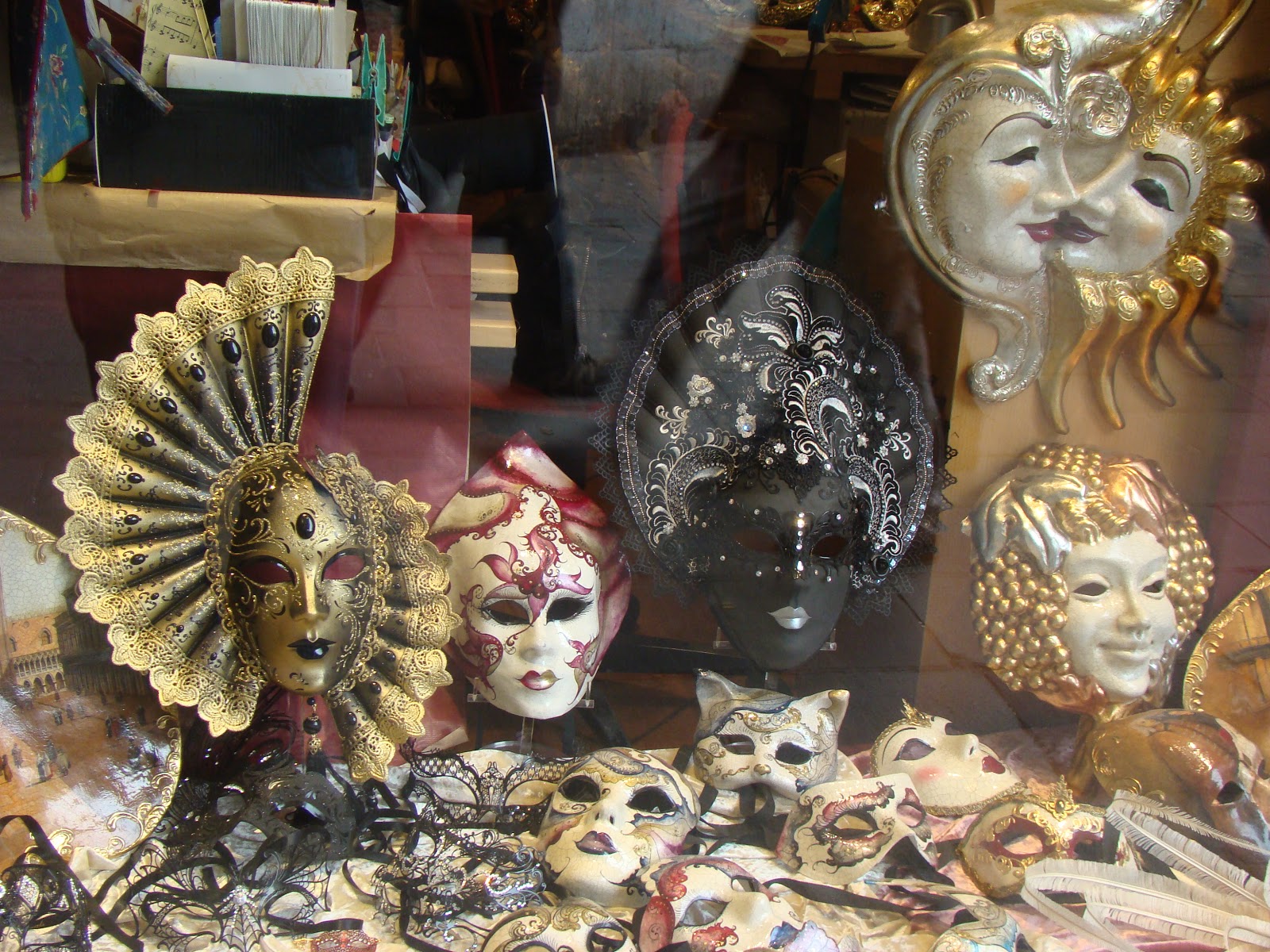
All its grandeur maybe like a beautiful Venetian mask; underneath, the city, the real face, may be crumbling. But here, mask is part of the face and life is part of the show. The cracks on the buildings and bridges and their peeled off coatings are as much part of Venice’s beauty as its magnificent palaces, churches and museums, architecture, statues and art work.

They are all brought together and mixed and blended into a marvelous dream-like experience by water that reaches every part of the city through wide and narrow canals.

It’s hard to say if Venice is a floating city or a sinking one. It’s hard to say if water will slowly consume it or help it grow. Perhaps uncertainty is part of Venice’s beauty.

My nostalgia over a childhood spent in Kerala backwaters may have influenced my instant love for Venice. But I’ve never felt more at home, more relaxed, in any other global city.

Is there any other city where there is not a single vehicle in the streets, not even a bicycle? I don’t remember seeing a single policeman in Venice either, though I did see a couple of police boats.

Boats there are, of all kinds, from ambulance, electricity services and telephone services to ferries, taxis and private boats, motorboats, rowing boats and gondolas. They are all over the numerous canals, moving at their own relaxed pace along backsides of buildings, by paved streets, below hundreds of arched bridges, or parked, sometimes with covers on.

Get out of water and walk the narrow streets past countless souvenir shops selling Venetian masks and Murano glass jewellery works, high-end retail outlets, cafes and bars that have set tables on the streets, happy tourists, hugging couples, smiling street musicians playing accordion and guitar, probing roadside vendors, including several Bangladeshis and Blacks, and some jobless folks who asks for a fag as soon as you light one, to the grand squares, palaces, churches and museums, and get lost in the perfection of murals, paintings, sculptures and architecture, or get mesmerised by the minute details of masks, glassworks and jewellery. Or, feed parrots at Saint Mark Square—it’s wonderful though the birds seem to have a clear preference for girls, as they refused to bite on a piece of bun I offered until I threw it down. Or, sit by the canal watching boats and birds and buildings, people and water. Eat you food, drink your drink, take your time.

Venice is made up of more than a hundred small islands in the Venetian lagoon connected by bridges on the Adriatic Sea in northeast Italy. It was first built in early fifth century when several mainland Italians decided to settle in the salty water lagoon from fear of invading barbarians. The buildings here stand on thousands of closely spaced wooden pilings driven into the mud. Then they were sawn on top to make a flat surface. Most building in Venice today stand on piles sunk more than 1,000 years ago.

Venice has many landmarks—Doge’s Palace, Piazza San Marco, Rialto Bridge, world’s first Jewish ghetto Sotoporto, Santa Maria Della Salute Basilica, Murano island, Mozart’s residence, Harry’s Bar….

But the place is not about going from place to place, crossing out “must see, must do” items one by one. Venice is more about relaxing and doing things at your own pace. About walking around and getting used to the slow pace of life on water, to let yourself float like gentle waves, directionless.

Landmarks are great, gondola rides are lovely, the Campanille or bell tower is grand, churches and sculptures are magnificent, masks and glassworks are fascinating, but it’s best to avoid rushing through them. Venice demands to be explored, to be discovered, to be savoured.

Walk away from the main streets to inside the city without any particular destination. That’s when you discover the life in Venice. You’ll cross small bridges and canals, see the yellow and pink buildings where people live, flower vases on their windows, clotheslines outside them. You’ll see small squares where kids play and elders sit around cafes and shops. You’ll reach dead-ends facing narrow canals where people park their boats. You’ll see men and women rowing or motoring away to work. You’ll see parents and grandparents taking kids out on a walk. You’ll see old Jewish ghettos and new ones. You’ll see people go to market and laugh out loud.

If you get lost and ask for help, you’ll realize that most locals don’t understand English. Then you repeat words like “ferry”, “station”, “boat”, “vaporetto”. And they will tell you in their sweet local language where the nearest ferry stop is amidst roars of laughter . You may not get a clear idea, but don’t worry, move on; the ferry is never too far.

In one of those walks we come across Stephania selling her paintings in a square. She studied in an art school in Venice, and her paintings are beautiful, with arch-shaped bridges, yellow and pink buildings, colonnades, landmarks, gondolas, the sky and reflections on wavy water in brilliant water colours. She sells them for around 20 euros each. She looks happy. Beautiful life, I think.

Another artist we met is Rsgar who makes and sells masks from papier-mache at his studio shop. Venetian masks--many sporting florid designs and bright colours such as gold and silver, and decorated with fur, fabric and feathers—have their own magic world and a long history. People in the city actually used to wear masks to hide their identity and social status and, of course, it helped them involve in non-social activities. Sorry, those days of masqueraded fun are gone. Anyway, this day, Rsgar introduces us to several popular masks such as the Casanova mask, Pierrot and Joker. We are lost in the details of their design and stunning colour combination. He says he takes about four hours to finish one mask. He charges 30-50 euros each.

On a Sunday morning, walking the streets of a residential area, we notice that Venetians are not much into television. We see people sitting outside their houses, drinking coffee or tea and staring at the water. We see young fathers playing with their little ones. We drink coffee from a small shop. We sit outside by the canal. Some locals are there. They are friendly and courteous. On higher floors, windows are open. We hear children and grown-ups, but we don’t hear any television. Almost every house has TV antennas outside, but who needs TV here on a beautiful Sunday morning?

The gondola boatmen are unique. Almost all of them wear that typical T with horizontal stripes. Some wear round straw hat, some others sport shaved heads, almost all use dark sunglasses. They hum and they whistle and they always offer you a ride if you look at them. We ask the rate and one of them says it's 80 euros for 35 minutes. I ask if he would sing, “Do lafzon ki hai dil ki kahaani…” song in Amitabh Bachchan’s The Great Gambler playing in my mind. “In the opera house,” he says in his masculine voice, grinning.

We did hear a song from a gondola. But it isn't the boatman singing. It's a bulky man standing on the gondola comfortably and singing in the highpitched voice of an opera singer. His voice stay in the air and set the background for several minutes. We feel good.

Most local men and women are not really sophisticated. Of course, those in designer shops and big showrooms are suave. But most those you find on the streets come across as plain people. The language itself is let’s say a bit naïve. It’s a pleasure to hear them say “grappa” without ignoring a single letter, giving due respect to the “r” and the second “p”; it’s almost like caressing that word or, in this case, caressing a bottle of grappa, which is a local drink. The drink itself is not very smooth, but it has the Venetian flavour and it’s a pleasure saying “gurrappah”, be it in a bar or a supermarket.

Well, bars in Venice—as most cities of the world—are a bit expensive for people who don’t count their drink. So we largely bought our drink from supermarkets and kept it in our bag. Readymix :). Nobody minds if you drink or smoke in some corner. And, cheers, there are no probing policemen.

One problem with frequent boozing is frequent leaking. And that’s not cheap as I realised in my only trip to a public toilet in Venice. Like metro stations, there are barriers at the entrance. You insert one and half euros and it opens. I put in two coins of one euro each and waited for the change. The door opened, but no change. A woman there tells me the machine doesn’t return money, I could have taken change from her. At two euros, or almost Rs 140, that must be my most expensive leak.

I never went back to a public toilet. Of course not. I’d rather spend three or four euros in a beer or a drink and use the loo in a bar.

Although entry is restricted in loos, the entire public transport system in Venice runs on trust. Mostly. You can just walk in and walk out of ferries and buses; no one asks anything. I saw only one ticket examiner in my entire trip and at that time I didn’t have my ticket in my pocket. He just walked away when I said it’s with my friend.

I could never make out the real feeling of local people towards tourists. Obviously tourists are ruling the place, going wherever they feel like, having fun and clicking photos, and perhaps restricting the locals and denying them privacy. The old people may be missing certain things and traditions, but not many people could be complaining. After all they live off tourism, making and selling masks and glassworks and other stuff for tourists, renting out rooms, running bars and restaurants, rowing gondolas and riding water taxis and ferries…

So tourists are always welcome, provided they don’t dirty the place. Venice is very clean. Spick and span, streets and waterways. It’s a surprise, almost a wonder, to see a place so full of water to be without mosquitoes and flies. Kerala should do a study on how Venice is managing its waste, wastewater, drainage and drinking water systems. And, of course, making visitors feel at home.


an old woman hanging clothes

the bridge near the bus stop


a tourist feeding parrots at st mark's square
Rialto bridge in black & white


a shop window

Friday, December 23, 2011

Food and Girl


What strikes first is her superstar looks. Toned body, stylish hair let loose, shaped eyebrows, fair and lovely face oozing with confidence, unbuttoned jacket on matching top…. What's the secret, girl? What cream, what spa, what diet?
It’s not about her looks, stupid. She’s talking about the country’s economy; about the world’s crisis. She is a professor.
Yes, yes, I understand. I know this smiling girl. Always pleasant, she sat in her corner, smiling and doing her work. Nobody bothered her about anything. Then one day she became a lecturer. And now she is a management expert; her opinion, golden quote. What do you think Nokia should do about Samsung, smiling girl?
Be serious, man. Forget smiling girls and micro issues. Here you have a macroeconomics expert, teaching in Harvard.
Harvard? Yeah, I know. The Ivy League. Meant for the best in the world. Where champions learn their basics. Which school did you go to, girl? I want to enlist my daughter there. Did you study in Delhi?
Come on, man, don’t be so narrow minded. Listen to her. She is talking about much bigger things than your daughter. Take, for example, the food bill that will impact thousands of children in our country.
Food bill?
The National Food Security Bill. Once it's passed in Parliament and becomes an Act and is implemented, it is supposed to ensure that nobody goes hungry in the country.
Wow. Bravo! That’s noble. Our country needs that. I know we have more hungry people than anywhere else in the world. Some 700 million poor, isn't it? Here's one for the food bill.
Hey, hey, don’t jump the gun. First listen what she says. She says it’s a stupid idea that will cost the country thousands of crores of rupees every year. She says it’s irresponsible for the government to push such a thing and that it's only meant to win votes in the elections.
Well, if people get to eat and they are happy and if they vote for the same party, what’s the harm?
You don’t get it, man. Hear her out before making comments. See, the real poor will not benefit from this Act. All the money will go into some frauds. Haven't you read about the World Bank study that said 60% of food grains released through the public distribution system does not reach those it is meant for? Now the government will use the same distribution model for the food Act. You know very well where it will end up—corrupt officials, politicians and their dear ones.
True, but once the Lokpal bill is passed, then ideally such issues will be sorted out. You too were at the Ramlila Maidan, weren't you? You said it will at least provide a tool to sort out these corruption issues.
Come on, man, but you should know a Lokpal cannot make the public distribution system work. No bill can change the system here, you know that.
Oh! I thought I was the rebel, I was the cynic, and you were the optimists. It's you, white-collared executives, who relentlessly call for reforms and foreign investments and free trade, you're the ones who say the country will rule the world.
It's true that we need Lokpal and we need to fight corruption. It's also true that we are an emerging economic super power destined to control the world within a decade or two. But to achieve that, we have to make the right moves, we have to open up and let in capital to help the cuntry achieve its full potential.
Now you are going over my head. All I know is we are hungry – some 700 million of us – and we need food. You can't infinitely feed us with dreams that the Wal-Marts and the Googles will pull us out of poverty.
There, there! Don't be upset. You don't understand it because you don't know economics. Have you read Adam Smith? John Stuart Mill? Max Weber? John Kenneth Galbraith? Milton Friedman? Paul Krugman and Joseph Stiglitz?
I've heard some of those names. They are all economists, huh?
There you are. See, you don't know a thing about economics. What are you talking about? Listen to this girl here, half your age, she knows her stuff.
You're right. She's Harvard professor; I am BA pass....But I am hungry.

Thursday, November 10, 2011

11.11.11

It's 11.11 on 11.11.11!

I remember planning to send a letter or postcard to achachan on this date...just for the heck of it.

I thought it will make him smile..

It will make Appu smile too.

Perhaps I'll send her a mail.

But I don't feel the joy of doing it.

Will I ever feel happiness as I used to so easily all these years?

I don't know.

It looks like I've lost faith in life. Nothing is secure. Nobody is safe. Anything can happen to anybody any time.

Is it a curse? Why? Who?

It's funny, it's crazy that despite all this, despite a series of killer tragedies, despite being repeatedly reminded that our life is not in our hands, I continue to worry about money and job and security and other stupid, clearly meaningless things that the capital world has taught us to respect.

11.11.11. Can it be the freedom day that helps me break free from the money-centred system and live a simpler, free and fair life?

I wish it did.


rishi

Friday, October 07, 2011

Jobless Morning


A lot of people have said a lot of things about Steve Jobs. Don't think there's anything left to say. At least for someone who has never seen him or used anything that he helped create. Not even an iPod. But most certainly due to an overwhelming overflow of glorious outpourings and information on him, I can't but think about this man. Who was he? Why was he so popular? Was he a Thomas Edison? Or, a Pablo Picasso? Was he an inventor? Was he an artist? No, no, no. He was a consumerist. The greatest, perhaps. One who knew what exactly a consumer needed.

Sure, Jobs had a great sense of design that  matched any artist. But his direction was diagonally opposite to Picasso's. As an artist, Picasso was after the truth, uncovering the secrets and inner selves of objects he painted. Jobs, as a designer, was after ease of use. hid the secrets and brains of his machines behind sleek interfaces.

And, like Edison, Jobs came up with things that changed the way people did things. But Edison redefined life for the entire humanity, Jobs did it for the consumer.

He was the perfect foil for the I-me-myself consumer that the developed world has become. His inventions are basically the high point of this generation of independent, self-centered individuals who, spoilt for choices in entertainment and comforts, shut themselves out from the rest of humanity to live in their own individual worlds. We see iPad, we hear iPod, we speak on iPhone. That's the ultimate power of this generation—to create and live in one's own individual world. And the greatness of Jobs was to read the mind of this consumer who every businessman in every industry is out to woo.

Post script: Another guy, who did exactly that (reading the consumer's mind) and himself a complete individualist, has began changing the world of individual consumerism. His name: Mark Zuckerberg. His contribution to humanity: Facebook revolution.


Monday, October 03, 2011

Death of a Diplomat (A short story)


It’s the sound of the radio that woke Krishan Sharma. Who put it on? He yelled. Apparently, he had dozed off on the sofa. There was nobody else in the palatial living room except for the numerous portraits, paintings and the tiger skin that hung on the wall. Omaar! Lekshmii! Yousef! The house is full of people when you don’t want them. Veena! Vikram! Gautam! Holy shit! Where the heck is everybody? Vikram! Where are the kids? Gautam!
Sharma rubbed his eyes. He had a headache and he was thirsty. He was slumbering towards the radio when its irritating noise turned into meaningful words—excited, edgy words of a newsreader. It’s a war! Indian army is marching towards Lahore. Oh my god! There has been a huge terror attack on Mumbai! They say it was Pakistan-supported terrorist group. It’s a war! Vikram, Gautam! Oh my sons!
He rushed to the window to peek out. There’s a noisy crowd outside the embassy. Some are throwing stones. They are going to kill us! Veena! Vikram! We must escape. Where are these guys? Where is the telephone?
The portraits had descented from the wall and were dancing around him. He heard a stone crash a window behind him. There are cries and yells. Was that Veena? Veena, Veena! We are dead! Gautam! Mahatma Gandhi, Muhammed Ali Jinnah, Pandit Nehru, Indira Gandhi, Zia ul Haq, the tiger…all the faces were going around him. Are they making the noise? Are they laughing? Or chanting? Sanjay Gandhi, Barack Obama, Narendra Modi, Bin Laden, Veena, Antonia…Stop it, STOP IT!
Sharma jumped up. He was on his bed. Out of breath and sweating profusely. Another bad dream! The aircon is working alright. Sharma felt his head. It was hot and wet with his sweat. He sat up. Poured a glass of water from a jar on the bedside table. He sat in the dark. There was enough light coming through the curtains from outside. The moon was out.
He sat on the bed, staring through the transparent curtain, through the balcony, to the night. Deep night. The gaze just goes on and on through the deep blue sky. What a life this is! What a shame!
Sharma was living alone. He had never had any sleepless night during his days as the Indian  ambassador in Pakistan. He was never scared and felt threatened in the not-so-friendly neighbouring country. In fact, he had a good relationship with Zia ul Haq. It was before Kashmir came into a boiling point. It was when Soviet Union was still at large in Afghanistan. And Sharma always considered himself a brave man. Ready to deal with any crisis. He could've had many, being an obsessive philanderer with extremely dangerous liaisons wherever he went. He could still feel the heat deep in his abdomen, itching on his penis. An uncontrollable urge to pee.
He stood up hurriedly and clumsily. His whole body was paining. The knees almost gave in. Fucking arthritis! He didn't want to wet his Panama and bed. He turned on the light. It hit his eyes. He shambled to the bathroom, eyes almost shut, unable to bear the light.
His sons, Vikram and Gautam, were now in their late forties, leading their successful lives in Australia and Dubai. It was more than 20 years since Sharma divorced their mother, Veena. That was in Spain. In the year he retired from the Indian Foreign Service after serving in Zambia, Mauritius, Australia and Spain besides Pakistan. He married his new love, Antonia, then the raunchy wife of royal descendant. She was still his wife. But was staying in Spain these days.
Sharma sat on the toilet seat long after he was through with his pee. He was never sure if he has stopped peeing. That's what sugar does to you: an eternal burning at the edge of your penis. Sharma noticed the trail of urine drops from the door. He got up slowly. He splashed some water on his face. He looked at the mirror. He saw only pain and disgust on his face. He had nothing else left in him. Only hatred.
He was afraid to sleep. He was afraid of dreams. He checked the clock. It was 3.30 in the morning. Another long, boring day is staring at him.
He had not stepped out of the house in a long time. He hated going for a walk. How can anyone stroll into a park without having a cigar to chew on? Or a pipe? And he just couldn't stand the neighbourhood, the sanghis. They seem to live in the park. Doing their circus, bhajans, foolish laughing sessions and, yes, tea and breakfast. Most unbearable is their friendliness. Why can’t they just let an old, retired man be. They will walk along and talk. To share their rightful half-truths. Lies and bores. That's all what life gets, after a certain age.
The last time Sharma went out of his home was more than five months ago, on a stretcher. That was when he had a massive heart attack. Why did he survive?
Perhaps to keep Raju and Nalini employed for some more time. Or, for his sons to get together one last time.
Sharma looked at the clock again. It will take at least an hour before Raju comes in with the bed tea and newspapers. After a while he will serve a toast and a fistful of tablets. He'll turn on the TV and hand over the remote. All for more lies and bores.
Sharma sat on his easy chair by his study table, facing the balcony. The sky had started changing colours. He opened the mini bar at the bottom of the table. He took out a glass and placed it on the table. Then he took out a cognac bottle with great care, trying to control trembling with both hands while pouring a drink. It spilt a bit. He was used to it. He took a sip and then opened the drawer, and  took out his suicide note and gun. He had been doing it almost every day since he wrote the suicide note about a month earlier. It was two days after Antonia had left for Spain, to spend time with her grandchildren who were not his grandchildren.
It was nice when she was around. They would sit in the balcony and talk about old days; the tensions, the uncertainties, of walking out on their families. 

Veena was shocked, but she always knew her husband had an animal-like libido. Vikram was 10 and he told him he didn't want to see him. He did come visiting when he was hospitalised, but eyes clearly said he didn't care. But Antonia cared. All these years. She even came to India with him when old age and frequent nostalgic bouts made him return to his ancestral land and buy a palatial flat in Delhi's suburbs. But ultimately Antonia went back. She visited him for about a month two times a year. She had promised to come back in six months.
But waiting was getting more unbearable every day. Who can endure infinite pain and boredom for, well, a few days with Antonia? Her small talks, her kiss on the cheek, her hugs? Yes, they are lovely, but... 

Sharma put the barrel of the pistol in his mouth. That was one sure way to ensure he didn't miss the target. He had done this several times, several mornings...his eyes tightly shut, his trembling hands struggling to pull the trigger... And then he would hear Raju opening the main door, and would hurriedly put the gun and the suicide note back in the drawer.
It had to change one day. Raju had to be late enough one day. Or Sharma had to be early enough. It was just a matter of time. He had to die. He knew it. He breathed in deeply one last time.
The next morning, newspapers had a small report: Former diplomat shoots himself.


Thursday, September 22, 2011

What the PPPuck! (Teach Me Some Economics, Please! – Part II)

 
We are truly a chest-thumping nation. Now they say India is the third largest economy! That is in terms of purchase power parity, which basically means comparing countries in terms of how much you have to spend for certain amount of everyday products in each country. So a dollar in India could be worth 10 dollars in the US.

There is this Big Mac index, which basically compares the cost of McDonald’s McChicken in different countries, in local currencies, and decides a country’s PPP by calculating how much McBurgers a country’s gross domestic product can buy. Strange. And we Indians, at least our media, which works 24x7 to boost stock market sentiments, get excited by such comparisons. We won’t allow the sheer number of people we have in the country to come into the picture.

They say it’s not required because we are comparing countries’ wealth, not that of people.

If that’s the case, then why PPP? Let’s go by real exchange rates. Let’s go by one’s affordability anywhere in the world.

And by the way, what if we calculate this PPP on the basis of the price of petrol?

Indians apparently pay much more for petrol than most countries in the world, in real currency conversion rates, not PPP, mind you.

Now, I drive a petrol car. When I see a newspaper that screams petrol prices are up by more than Rs 3 per litre and an advertisement of Jaguar XF Diesel S, an SUV costing about Rs 50 lakh, next to it, I just lose it. I’ll never understand why somebody driving a jaguar be offered subsidized fuel while users of two-wheelers and small cars, who account for most petrol consumption, pay through their noses.

What the PPPuck!

On the road I start seeing things. All those big SUVs going by were now laughing at me. They looked down sarcastically at the guy carrying all his 5-member family on a scooter. The world seems hostile and I feel a victim of injustice sitting in an air-conditioned car. Beggars and rikshaw pullers go out of the picture. It’s a world of diesel cars and petrol vehicles.

There were some suggestions of dual pricing for diesel, to limit subsidies to farmers, commodity transporters and perhaps public transport vehicles. But the finance minister has denied it and oil marketers have said it’s difficult to implement and anyway it’s not worth the pain because private vehicles account for just about 10-15% of total diesel consumption. Fair enough.

But the problem here is, petrol sales could well be less than diesel sale to private vehicles. And by artificially keeping diesel prices much less than petrol, the government is only encouraging people to shift to diesel vehicles. So petrol consumption falls and diesel sales rise. What’s the point? Why increase petrol prices so very often? After all petrol accounted for just about 3% (Rs 5,300 crore out of Rs 121,571 crore losses from oil sales) of the country’s total oil subsidy.

Also, apparently, it’s not that the government is subsidizing diesel, or jet fuel, which also by the way costs more than Rs 10 less than petrol in India, the only country where it happens. Fuel prices are so high because taxes are so high on them. In the case of petrol about 40% of its prices are taxes and duties.

So next time we talk about GST, or common tax rates for goods and services across the country, let’s talk making petrol and diesel, and perhaps jet fuel too, part of it.

Monday, September 19, 2011

Teach Me Some Economics, Please!

I would love to help realize the editor’s call for making our business newspaper accessible to as many people as possible, with simple and clear writing. But, often I don’t get the economics. (Psst! don't tell the editor.)
Economic theories are like god’s commandments. You can’t question them.
But I’m tired of renegotiating my home loan with the bank. It’s some eight years since I took the home loan. And I think they must have increased rates at least 15 times. They never cut benchmark rates. Instead they offer larger discounts to attract new borrowers. Existing customers can avail better discounts through renegotiation, which mostly involves a five-figure fee. I must have availed this five times. Some new guidelines I believe bar banks from offering higher discounts to new customers. So hopefully I will not have to renegotiate my loan rate again. You never know though.
The problem now is the loan rates are only going up. And prices of food and fuel are going up. The learnt tell us that increasing interest rates is the most effective way to stop increase in commodity prices. So when prices go up, the banking regulator prompts an increase in the interest rate of all kinds of loans. But how?
If you can’t afford a product, you can’t afford a loan to fund it too. This will make several buyers not to buy and then sellers will be sitting on a pile of products—they call it inventory—for which there are no buyers. This will force them to reduce prices.
The idea is simple. But it doesn’t seem to be working these days. Over the last 19 months, the Reserve Bank increased interest rates 12 times, yet the inflation rate—or, increase in prices of commodities in one year—is still high, at about 10%. Why?
My sense is that this theory is meant for things like houses, cars and televisions, not for basic and perishable products like food and vegetables. That’s because man can’t do without food, he can put off car and fridge for later.
So when demand for food is higher than supply of food and this pushes up prices, the only way to deal with it is to increase food availability. If you are reducing the demand, that may be through starvation of the poor!
The government should encourage farmers grow more food crops through incentives and cheaper loans. It has made loans costlier.
This has begun to impact production. This has begun to impact sales of cars, houses and garments, which are growing at a slower rate than before. So, food inflation is staying high, while industrial production is slowing.
Now, our government is trying to keep prices down but it wants to ensure overall economic and industrial growth stays intact. So, while increasing interest rates, it also allows companies to borrow more money from overseas at lower rates. This option is however not available for farmers.
So it seems making loans costlier is an extremely ineffective way to fight rising food prices. But then I don’t know much of economics. Many those who do, including our policy makers, apparently believe it is effective and they give a feeling that it’s a tried and tested method.
But I don’t get it. Can somebody help, please?

Monday, August 29, 2011

This is the darkest hour in my life…


This is the darkest hour in my life
There’s no trace of light anywhere
Nothing moves, not even the air

Where has everyone gone?
Where’s the music, where’s the booze?
Is the party over so very soon?

There were a whole lot of us
My crazy family, our cranky friends
We were celebrating the now of our lives

Now I see nothing, hear no sound
I can’t touch myself, can’t smell my sweat
Now is unbearable. Is this the end?

It was great fun, our party
We sang and we danced,
Children with their great grandparents

We laughed over globalization,
Fought over dumb charades
Everyone equal in the power of now

Then one of us stood up,
Raised a toast and collapsed,
Then another, then another…

Perhaps the heavens were jealous
A killer virus felled our champions
Without warning, without mercy

This is the darkest hour in my life
Now fragile and most uncertain
I’m frightened, I can’t live this moment

Is this the end? Has everyone left?
Am I hearing you footsteps,
My love, my love?

Friday, August 26, 2011

moments by borges

Moments
Jorge Luis Borges

If I were able to live my life anew,

In the next I would try to commit more errors.

I would not try to be so perfect, I would relax more.

I would be more foolish than I've been,

In fact, I would take few things seriously.

I would be less hygienic.

I would run more risks,

take more vacations,

contemplate more sunsets,

climb more mountains, swim more rivers.

I would go to more places where I've never been,

I would eat more ice cream and fewer beans,

I would have more real problems and less imaginary ones.


I was one of those people that lived sensibly

and prolifically each minute of his life;

Of course I had moments of happiness.

If I could go back I would try

to have only good moments.


Because if you didn't know, of that is life made:

only of moments; Don't lose the now.


I was one of those that never

went anywhere without a thermometer,

a hot-water bottle,

an umbrella, and a parachute;

If I could live again, I would travel lighter.


If I could live again,

I would begin to walk barefoot from the beginning of spring

and I would continue barefoot until autumn ends.

I would take more cart rides,

contemplate more dawns,

and play with more children,

If I had another life ahead of me.


But already you see, I am 85,

and I know that I am dying.

Wednesday, August 24, 2011

How much ado about Anna?

Anna Hazare is an unlikely champion for India’s youth. The 74-year-old social activist and Gandhian from Maharashtra recently started a second hunger strike for new anti-corruption authority in the country. It is certainly not the first proposal for an anti-corruption legislative. But this is the first nationwide mass movement against corruption. And perhaps the first time the country’s youth has hit the streets for a national cause.

That’s a good thing. They say 72% of Indian population is below 40 and 47% is below 20. So it’s important the younger lot take some interest in the way things are done in the country.

What looks not so good is the anti-corruption bill that Anna is starving for. Basically, Anna and his allies demand a super cop with powers to police the police and act against every public servant from an office clerk to the prime minister and chief justice.

Why? Because the existing anti-corruption authorities such as the central vigilance commission and departmental vigilance wings lack powers, resources, transparency and, hence, credibility.

Fair enough. There is a need to have a transparent, efficient ombudsman to take actions against the corrupt across all levels within a limited time frame.

But is Jan Lokpal the solution for this? I doubt.

The Anna team’s proposal says Lokpal members will be selected not by politicians, but by “judges, citizen and constitutional authorities”.

Their contention, rightly, is that the government and the political class have become far too corrupt and have lost all credibility, so they cannot be trusted to put the system back in order, not even finding the right people to do it.

The problem with this line of thinking is that it demands people's trust for a new supreme bunch of credible and responsible people.

Now, the law makers, judges and bureaucrats are all bound by oath to be true and fair in their duties. Most of them are not. How different the new super bureaucracy will be?

If people cannot trust the government—or those they can vote out of power—to ensure the bureaucrats and police do their jobs efficiently, or to even find a right ombudsman to do it, then how can they trust a new bench of “judges, citizen and constitutional authorities” to appoint a super, super authority that can take action against the highest democratically appointed authorities?

Who are these people anyway?

Judges one can relate to and perhaps accept as being more truthful and responsible than politicians—although it will extremely tough to convince a common man that K G Balakrishnan is more trustworthy than Manmohan Singh and AB Vajpayee.

Constitutional authorities? OK, at least something that will be clearly defined somewhere.

Citizen? Free for all? Unlikely. Or, some super citizen, like super cops? Apparently, they will be more responsible than you and me and the local legislative member who promised a hospital in your village to convince you to vote for him and perhaps built it. You may not have heard of them before, but you can always Google search: they will be reasonably well known.

Is that what all those people wearing Gandhi topis and waving tricolors all over the place, shouting “Anna, Anna”, crave for? Really?

I would like to think that it would be better to provide or force what they lack to the authorities responsible to ensure transparency and fair play: namely, autonomy, authority, powers and resources. The chances of success, however minuet they may be, will not be any lesser than having a new undemocratic super body.

What is good about Anna is the impact he had on the crowds. His ability to bring people to the streets in millions. Transparency in the whole system and effective implementation of the right to information Act are crucial and need nation-wide mass movement to have a chance to succeed. Anna has initiated it.

Of course, there are all kinds of people in the streets. There are those who have spent their lives fighting corruption and those who try to drive their agendas. There are hooligans and well-wishers, there are those who have come to capture a piece of history and those who have come to make some money or pickpocket. There are office-goers and the jobless, conservatives and liberals, Rightists and Leftists, social workers and sex workers, lovers and beggars, celebrities and the destitute….

There are also the youth, who caught the Anna fever from Facebook or college campuses, and who are having their first encounter with a national movement.

Hopefully, Anna is only a starting point for this new generation to become proactive and clean up the system.

Tuesday, August 23, 2011

1964 borges

today is jorge luis borges' 112th birthday. he was born on august 24, 1899 and died on june 14, 1986.

here is one of his poems that somewhat reflects my mood sometimes...


"1964"

I shan't be happy anymore. Maybe it doesn't matter.
There are so many other things in the world.
Any instant is more profound
And diverse than the sea. Life is short
And even if the hours are so long,
An obscure wonder awaits us.
Death, that other sea, that other arrow,
That free us from sun, moon
And love. The happiness you gave me
And took away, must be erased.
What was everything must turn into nothing.
Now I only have the joy of being sad.
That vain custom that takes me
To the south, to a certain street, to a certain corner.